Buying a laundromat is a business acquisition, and the price is set by earnings, not by the machines on the floor. Across 855 laundromats sold on BizBuySell between 2021 and 2025, the median sale price was $250,000 against median seller's discretionary earnings of $76,560, at a median earnings multiple of 3.50. Hold those two numbers in your head before you walk a single store, because nearly everything that goes wrong in this asset class is a figure nobody verified.
Most of what ranks for this topic is written by companies that sell commercial washers and dryers. Their interest is the equipment. Yours is the cash flow, the lease, and whether a lender will fund the purchase at the price you agreed.
What laundromats actually sell for
The public numbers on this industry disagree with each other, so start by knowing which ones are worth anything.
The Coin Laundry Association's industry overview puts roughly 29,500 coin laundries in the United States generating nearly $5 billion a year, with store values from $50,000 to more than $1 million and cash flow between $15,000 and $300,000. Too wide to price a store with, and the same page cites 2017 Census data and a 2014 average store size, so treat the count as dated. IBISWorld counts 17,461 laundromat businesses in 2026, declining about 1.5 percent a year since 2021. When the store count is disputed by 12,000 units, no industry average will underwrite your deal.
Closed-transaction data records what buyers paid rather than what sellers wanted.
Median laundromat sale price by year
BizBuySell laundromat valuation benchmarks, businesses sold and reported to BizBuySell, accessed August 16, 2026.
Show data table
| Year | Median sale price |
|---|---|
| 2021 | 220,000 |
| 2022 | 240,000 |
| 2023 | 250,000 |
| 2024 | 270,000 |
| 2025 | 287,000 |
Prices have climbed faster than earnings. Median revenue on sold stores went from $189,464 in 2021 to $215,500 in 2025, while the average earnings multiple went from 3.61 to 4.12. You pay more per dollar of cash flow than a buyer did four years ago, which our look at whether a laundromat is a good investment takes up in full.
Listings claim about 50 percent more earnings than closed deals report
Earnings claimed on listings vs earnings reported on closed sales
- Recent listings (asking)
- Businesses actually sold
BizBuySell laundromat valuation benchmarks, 855 businesses sold 2021 to 2025, accessed August 16, 2026.
Show data table
| Position in the range | Recent listings (asking) | Businesses actually sold |
|---|---|---|
| Lower quartile | 57,250 | 46,375 |
| Median | 114,500 | 76,560 |
| Upper quartile | 195,000 | 138,105 |
The multiples move the same way. Recent listings carry a median asking multiple of 4.80 against 3.50 on sold businesses, the average sale-to-ask ratio is 0.92, and median time on market is 139 days. A listing is an opening position, and an unusually optimistic one here, because self-service laundry is a cash business where the seller's claimed revenue is often the only record of it. That is why laundromat diligence is mostly forensic accounting on utility meters.
The financing sets your ceiling, not the asking price
If you are using an SBA 7(a) loan, the rules decide what you can pay long before the seller does. Four of them matter here, all from SBA's loan origination rulebook, SOP 50 10 8.1, which takes effect on October 1, 2026.
- Equity injection of 10 percent of total project cost. For a first-time buyer, classified as an Initial Acquisition, it cannot be reduced or eliminated. Total project cost includes closing costs, the guaranty fee, and any working capital in the request.
- Amortization capped at 10 years on any 7(a) loan facilitating a change of ownership.
- Debt service coverage of 1.25 to 1, on historical figures, defined as EBITDA divided by combined post-transaction debt service. The lender must evaluate your projections but may not rely on them to meet it.
- A business valuation commissioned by the lender. From an accredited independent Qualified Source, prepared for the lender, not one you or the seller ordered. If the price exceeds the valuation, you cover the difference in additional equity.
Run the median deal through that. A $250,000 purchase price needs at least $25,000 of injection, leaving a $225,000 loan. SBA's maximum variable rate for a loan that size is prime plus 6.0 percent, and prime was 6.75 percent as of August 11, 2026, so the ceiling is 12.75 percent. Amortized over the maximum 10 years, that is roughly $3,330 a month, close to $39,900 a year.
To clear 1.25 coverage on $39,900 of debt service, the business has to produce about $49,900. The median store's $76,560 of discretionary earnings leaves about $26,700 for the owner. Price the same loan at 9.75 percent instead, an illustration rather than a quoted offer, and annual debt service falls to about $35,300 with roughly $32,400 left over.
The median laundromat, bought at the median price with the minimum down payment, pays its new owner something like a part-time wage while the loan is outstanding. Nothing is wrong with that as long as you chose it. How much money a laundromat actually makes works the revenue and cost model line by line, and financing a laundromat purchase with an SBA loan covers the lender-side specifics.
The buying process, in order
Step 1
Get a financing range before you look at listings
Talk to an SBA lender first and establish what your liquidity supports after the injection, closing costs, and post-close working capital. Buyers who shop first and finance second fall in love with stores they cannot fund.
Step 2
Screen listings for what the ad omits
A listing that gives revenue but not utilities, or cash flow but not the owner's hours, or omits the remaining lease term, is not being careless. Ask for all three in the first email. The answers, and how fast they arrive, filter most of the market.
Step 3
Sign an LOI with a diligence window long enough to sit in the store
Thirty days is thin for an asset this hard to verify. You need calendar to pull utility bills, observe collections, and start a lender-ordered valuation. Make the window exclusive and the deposit refundable on diligence findings.
Step 4
Pull 24 to 36 months of utility bills before anything else
Gas, water, electric, and sewer, from the utility rather than the seller's file. Water consumption is a physical record of loads run, so compare it against claimed revenue at the store's posted vend prices. This step invalidates more listings than everything else combined.
Step 5
Verify revenue independently of the books
Card systems produce third-party reports you can reconcile. Coin stores do not, so observe collections in person across multiple visits and count turns per day yourself. Then compare three years of tax returns against what the seller is telling you now.
Step 6
Read the lease against the loan term
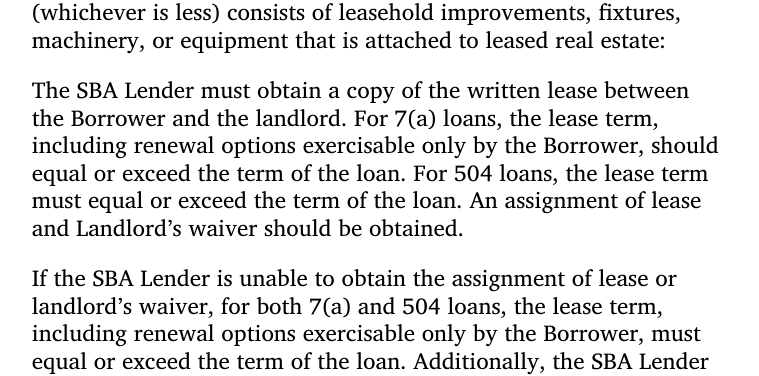
Under SBA's rules the lease term, including renewal options exercisable only by you, should equal or exceed the loan term, and the lender will want an assignment of lease and a landlord's waiver. Check the rent escalator, the CAM charges, and whether the lease is triple net, meaning you carry taxes, insurance, and building maintenance.
Step 7
Date every machine and price the replacement schedule
Record model and manufacture date off each nameplate, not the seller's summary. Build the replacement calendar against your loan amortization and hold a capital expenditure reserve, whether or not the lender asks for one.
Diligence specific to this asset class
Utilities, which are the whole argument
Water, gas, electric, and sewer are a standard line on any coin laundry profit and loss statement, and they are the most consequential number in the deal. Published estimates of utilities as a share of revenue vary so widely across sources that none is safe to underwrite with, and the Coin Laundry Association publishes no percentage in its public overview at all. Do not use an industry average here. Demand the actual bills.
They do two jobs. They tell you what the store costs to run, and they corroborate the revenue, because water volume and gas consumption are physical evidence of loads run that a seller cannot inflate.
“They can lie all they want, the power bill and water bill tells all.”
Then ask where it is going. High-efficiency front-load washers consume materially less per load than aging equipment, so the utility line and the machine age are one diligence item seen from two sides. Ask the utility about scheduled rate increases and any sewer surcharge, since a municipal rate change lands entirely on your margin.
The lease is the asset
You are buying a cash flow that exists at one address. If the lease ends, so does the business, and the machines are worth a fraction of what you paid for the going concern.
“The lease is one of the most important aspects of this business. I'd try and connect with the owner and see if they would negotiate a 10 year lease. If they don't renew the lease you could potentially have a 3 year business.”
The Coin Laundry Association describes coin laundry leases as typically running 10 to 25 years, reflecting how much plumbing, venting, and electrical work is sunk into the space. A store with three years left and no borrower-controlled options is not financeable on a 10 year note without renegotiating first, and the landlord knows what that leverage is worth.
Machine age against a 10 year loan
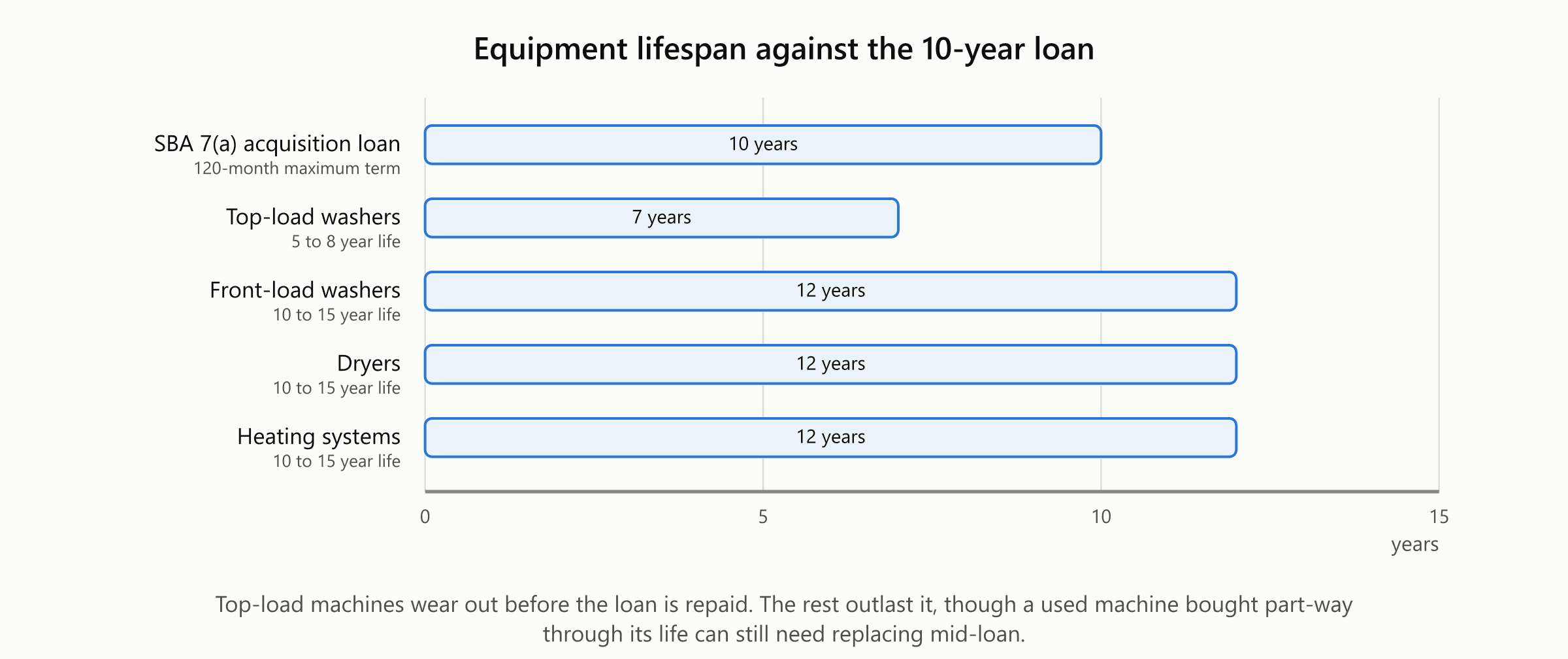
The Coin Laundry Association's accepted useful life for commercial equipment is 5 to 8 years for topload washers, 10 to 15 years for front-load washers in the 18 to 50 pound range, 10 to 15 years for 30 to 60 pound dryers, and 10 to 15 years for heating systems. SBA caps acquisition amortization at 10 years. Buy a store with 8 year old machines and much of the equipment reaches end of life while you are still paying for the loan that bought it.
Sellers know this too.
“It's common for a business owner to hold back on replacing equipment in the years before a sale.”
Deferred replacement inflates the earnings you are buying and hands you the bill. SBA's underwriting rules let a lender subtract unfunded capital expenditures when calculating adjusted debt service coverage, so build the same subtraction into your model. Equipment financing covers the replacement cycle and a business line of credit covers the surprise breakdown, but both add debt service on top of the acquisition loan.
Coin, card, and the verification problem
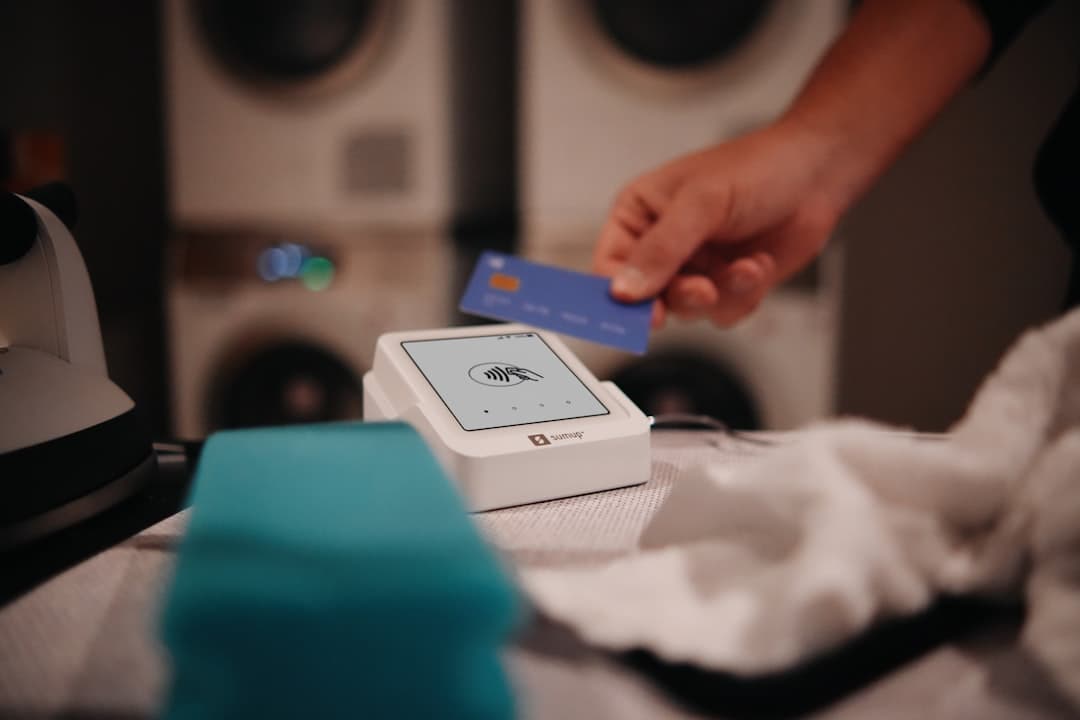
A card system produces a transaction record a third party generated. A coin store produces a bucket of quarters and the seller's word.
“Do not believe turns from the operator if you are already getting sketchy numbers. Is it a card system or coin? Card is easy to track. Coin you would have to watch several collections to verify numbers.”
This cuts both ways. A card-based store is easier to underwrite and easier to sell later. A coin store may be genuinely underreported, which is an opportunity if you can prove it and a trap if you take it on faith. Turns per day is the operating metric, generally three to as high as eight or more according to the Coin Laundry Association, and it is a number you count yourself.
Existing store, new build, or a zombie mat
An operating store gets you a lender-financeable cash flow history, the only thing that satisfies a 1.25 coverage test on historical figures. Building new gets you the equipment mix you want and no history at all, which pushes you toward projections SBA rules will not let a lender rely on. The third option is the distressed store the industry calls a zombie mat: open, poorly run, old machines at low turns. The upside is real and so is the risk, because you are financing a turnaround you then have to execute.
Location analysis starts all three. Demand tracks population density, renter share, and income, so read renter-occupied households within a short drive, then competitor stores and their vend prices, parking, and street visibility. Competitive analysis matters more here than in most small businesses because there is little product differentiation.
Adding value after purchase runs along known lines: replacing aging machines, extending hours, moving vend prices toward the local market, and layering on wash-dry-fold service, pickup and delivery, and vending. Wash-dry-fold converts a self-service store into one with payroll, which changes the business you thought you were buying.
What actually kills these deals
A lease that cannot carry a 10 year note. The most common hard stop, and the one buyers find last.
Utility bills that do not match claimed revenue. Usually fatal to the price rather than the deal.
A valuation under the agreed price. The shortfall comes out of your pocket as additional equity.
Equipment at end of life. It should move the price by the replacement cost, and often does not because nobody dated the machines.
An absentee assumption. Priced as passive, staffed as passive, then neglected or skimmed. That failure mode gets its own treatment in the investment verdict.
For the diligence items common to any acquisition rather than this one, work through our due diligence checklist for buying a business, and for pricing method, how to value a small business.
Frequently asked questions
Is owning a laundromat profitable?
At a modest scale, on the closed-sale data. Laundromats sold on BizBuySell between 2021 and 2025 reported median revenue of $219,878 and median discretionary earnings of $76,560, a margin near 35 percent, which is high for a service business. That figure includes the owner's own labor, and acquisition debt service comes out of it first.
What is the downside of owning a laundromat?
The lease, because the business only exists at that address. The utility line, because water, gas, and sewer costs move without your permission. Equipment replacement, which falls inside the 10 year window an acquisition loan runs. And the gap between passive income marketing and a cash business that needs supervision.
Is a laundromat still a good investment?
It can be, at the right price and with a verified lease. What changed is the price. Median sale prices rose from $220,000 in 2021 to $287,000 in 2025 while median revenue on those deals rose about 14 percent, pushing the average earnings multiple from 3.61 to 4.12.
How much cash do I need to buy a laundromat?
With SBA 7(a) financing, at least 10 percent of total project cost, and that minimum cannot be reduced or eliminated for a first-time buyer. Because total project cost includes closing costs and the guaranty fee, the cash requirement runs above 10 percent of the sticker price. Seller financing can cover part of it, but only on full standby and only up to half.
The short version
Buy the cash flow, not the store. Verify it against the water meter, not the seller's spreadsheet. Check that the lease outlives the loan before spending money on diligence. Date the machines and price the replacements into your model. Then let the financing tell you what you can pay, because asking and closing prices sit about 8 percent apart in this industry while claimed and real earnings sit much further than that.
This article is process documentation and education, not financial, legal, or tax advice, and nothing here recommends buying any particular business. Confirm every figure against the actual bills, returns, and lease for the store in front of you, and work with your own lender, attorney, and CPA.