
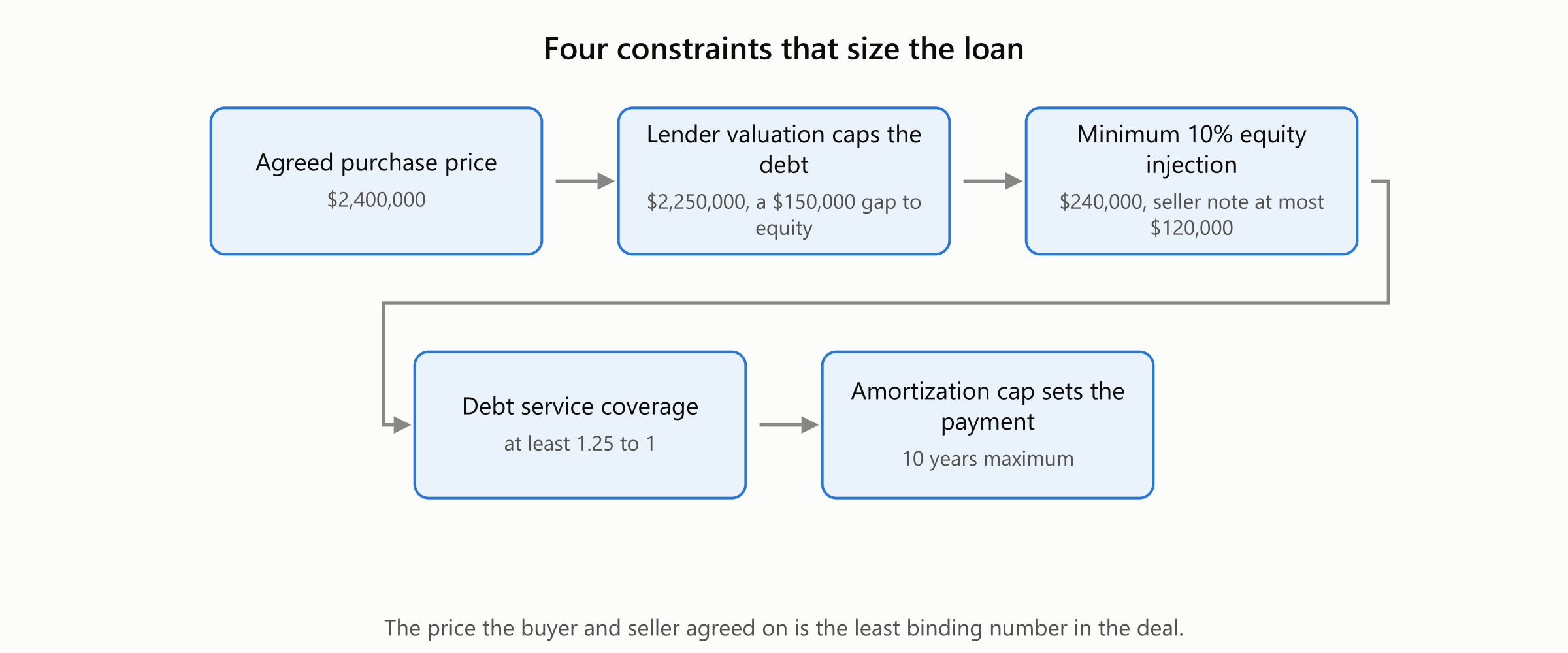
An SBA loan to buy a business is a 7(a) loan used to finance a change of ownership, and it is how most small business acquisitions in the United States actually get funded. Conventional lenders will not lend against goodwill. A 7(a) lender will, because the federal government guarantees part of the loss. That trade comes with rules, and the rules are the entire story. Four of them together decide how large a loan a given deal can support, and none of them care what you and the seller shook hands on.
This guide covers the financing path only. For the acquisition process itself, including when to bring in each advisor, start with how to buy a business and come back here once you know what you are buying.
Everything below is sourced from SBA's operating procedure, SOP 50 10, rather than from lender marketing. Version 8.1 was published August 14, 2026 and takes effect October 1, 2026, and it changes several things in this article. Those changes are flagged where they land.
The four rules that size the loan
Most buyers think the loan amount is the purchase price minus the down payment. It is not. It is the smallest number that survives four separate tests, applied in order.
- The valuation ceiling. Total debt supporting a change of ownership is limited to the business valuation amount. If the price exceeds the valuation, the difference must be covered with equity, not debt.
- The equity injection floor. A first acquisition requires a minimum injection of ten percent of total project cost, and it cannot be reduced or eliminated.
- The coverage test. Debt service coverage must clear the applicable ratio on historical or adjusted figures. Under SOP 50 10 8.1 that ratio is 1.25 to 1 for an initial acquisition, meaning the business has to generate $1.25 of cash flow for every $1.00 of annual loan payments, a 25 percent cushion.
- The amortization cap. The business and goodwill portion of a 7(a) change-of-ownership loan cannot amortize over more than ten years, per 13 CFR 120.212. Only real estate purchased in the same loan can run longer, which is covered below.
The fourth is the one buyers underestimate most, and it is worth sitting with. A ten year amortization roughly doubles the monthly payment relative to the twenty five year schedule people carry in their heads from real estate. That payment feeds directly into the coverage test, and the coverage test sets the maximum supportable price. The amortization cap constrains what you can pay far more than the interest rate does.
There is one exception, and it matters when the business owns its building. If the same 7(a) loan also buys the real estate, SOP 50 10 8.1 lets the maturity be blended on a weighted average of the uses, and only the real estate portion may run past ten years, up to a maximum of twenty five. The goodwill and working capital portion still amortizes over ten. So a deal that is mostly business value stays close to the ten year schedule even with a building attached, and it does not have to move to a 504 to get the longer term on the real estate.
Monthly payment on a $1,800,000 loan at 10.5%
Illustrative figures.
Show data table
| Payment | |
|---|---|
| 10-year term | 24,300 |
| 25-year term | 16,990 |
What a 7(a) loan does that nothing else will
The core benefit is narrow and decisive: a 7(a) loan will finance intangible assets. Goodwill, customer lists, trademarks, intellectual property, and non-compete agreements are all fundable under the program as long as the financial due diligence requirements are met. In a typical small business acquisition, intangibles are most of the purchase price. A conventional lender looking at the same deal sees a loan secured by used equipment worth a fraction of the ask, and declines.
The secondary benefits follow from the guaranty. Terms are long relative to conventional acquisition debt, rates are capped by regulation rather than set purely by the lender's appetite, and there is no balloon: 7(a) loans are required to have a stated amortization and maturity and may not balloon. For a buyer, that removes refinancing risk from the deal entirely.
The costs are equally concrete. You will give a personal guarantee. You will pay a guaranty fee. You will submit to a level of documentation that conventional borrowers do not face. And you will be subject to structural rules that limit how creative the deal can get, several of which have killed otherwise sensible transactions.
The alternative routes, and where each one actually beats 7(a), are compared in business acquisition loan options. The short version is that 504 cannot finance goodwill or working capital and is built for owner-occupied real estate and heavy equipment, which is why it is usually the wrong instrument for a going concern purchase. If your deal is mostly property, price the 50/40/10 structure in our SBA 504 loan calculator before assuming 7(a) is the answer.
Do you and the business both qualify?
Eligibility runs on two tracks, and buyers routinely check only one.
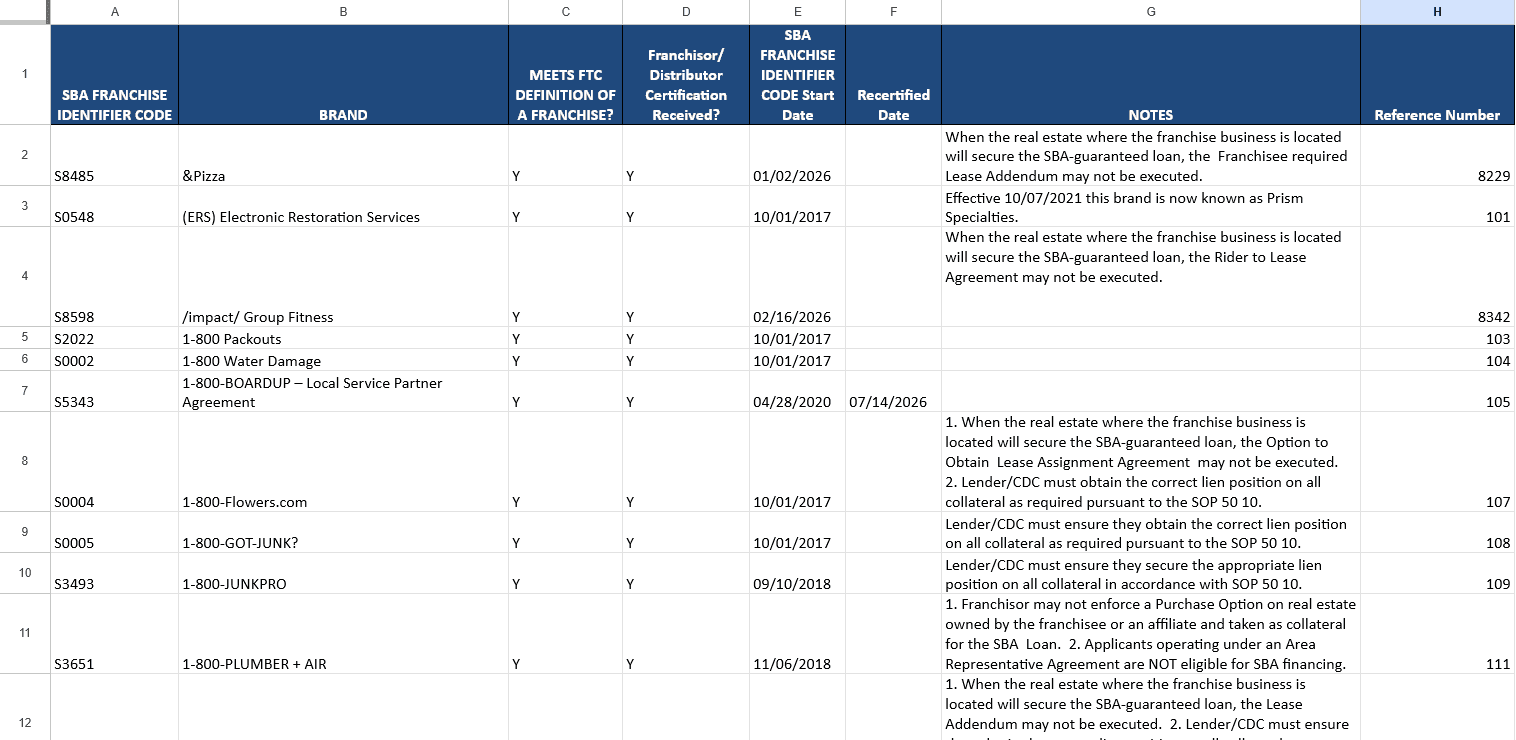
The business must be eligible. It has to be a for-profit small business under SBA's size standards for its industry, created or organized in the United States, located and primarily operating in the United States, and authorized to do business in its state. Certain business types are excluded outright, including lenders, life insurance carriers, and passive businesses that do not conduct active operations. If the target is a franchise, the brand's entry on the SBA Franchise Directory matters, and any management agreement outside the franchise disclosure documents gets reviewed to determine whether it makes the applicant an ineligible passive business.
You must be eligible. Owners are expected to have relevant management ability, acceptable credit and character, and enough liquidity to make the injection without stripping yourself bare. There is also a requirement most buyers have never heard of: credit not available elsewhere. The lender must certify that you could not obtain the same funds on reasonable terms without the SBA guaranty, and must state in the credit memorandum the specific weakness that makes the deal non-conventional. A lender may not cite your failure to meet their credit score policy as the sole reason. In practice this is rarely a barrier for an acquisition, because the goodwill-heavy structure is itself the identifiable weakness.
The transaction must be an eligible change of ownership. A stock purchase or a redemption qualifies. An asset purchase qualifies and is treated as a change of ownership when you acquire all or substantially all of the seller's assets and continue operating the business, which means the SBA rules apply either way. If you are still deciding, asset purchase versus stock purchase covers the trade-off, and the choice has tax consequences that a 7(a) loan does not change.
One structural point worth knowing before you pick a loan product: change of ownership transactions cannot be financed using 7(a) Small standards and must be underwritten under the full Appendix 15 requirements. SBA Express is not subject to that same bar, but its aggregate maximum of $500,000 gross puts it out of range for most acquisitions. The comparison is worked through in SBA Express versus standard 7(a).
SBA sorts change of ownership deals into four types, and nearly every rule in the rest of this article keys off which one you are in. This table is assembled directly from Appendix 15 of SOP 50 10 8.1, and the differences between rows are larger than most buyers expect.
| Transaction type | Minimum equity injection | Debt service coverage floor | QoE required at $3M price | Can the injection be reduced? |
|---|---|---|---|---|
| Initial Acquisition | 10% of total project cost | 1.25 to 1 | Yes | No, never |
| Business Expansion | 10% of total project cost | 1.15 to 1 | Yes | Yes, if liquidity and working capital support it and net worth is not negative |
| Owner Buyout | 10% of the purchase price in the purchase and sale agreement | 1.25 to 1 | No, exempt | Yes, on the same conditions as a Business Expansion |
| ESOP and Cooperative | Not subject to the injection requirement when acquiring a controlling 51% interest | 1.25 to 1 | No, exempt | Not applicable |
The row most first-time buyers sit in is the first one, and it is the strictest on the two rules that matter most: the injection cannot be reduced under any circumstances, and the coverage floor is the higher of the two.
The financing path, step by step
Step 1
Get a bankability read before you sign anything
Take the seller's financials and your proposed structure to a lender and ask whether it funds. This costs nothing and it is the cheapest hour in the process. Understand precisely what a yes means: the cash flow covers debt service under the lender's rules, with a government guaranty and your unlimited personal guarantee standing behind it. It does not mean the price is right, and no lender is telling you it is.
Step 2
Write an LOI that survives SBA structure
Several common deal terms are unenforceable under SBA rules and need to stay out of the letter of intent. Seller earnouts are prohibited, though buyer rebates based on business performance are allowed because they benefit the borrower. Any seller note counting toward your injection must be on full standby, and a note whose maturity falls inside the 7(a) loan term is not standby and counts for nothing. Timing language should read as targeting a date subject to lender underwriting.
Step 3
Assemble the document package
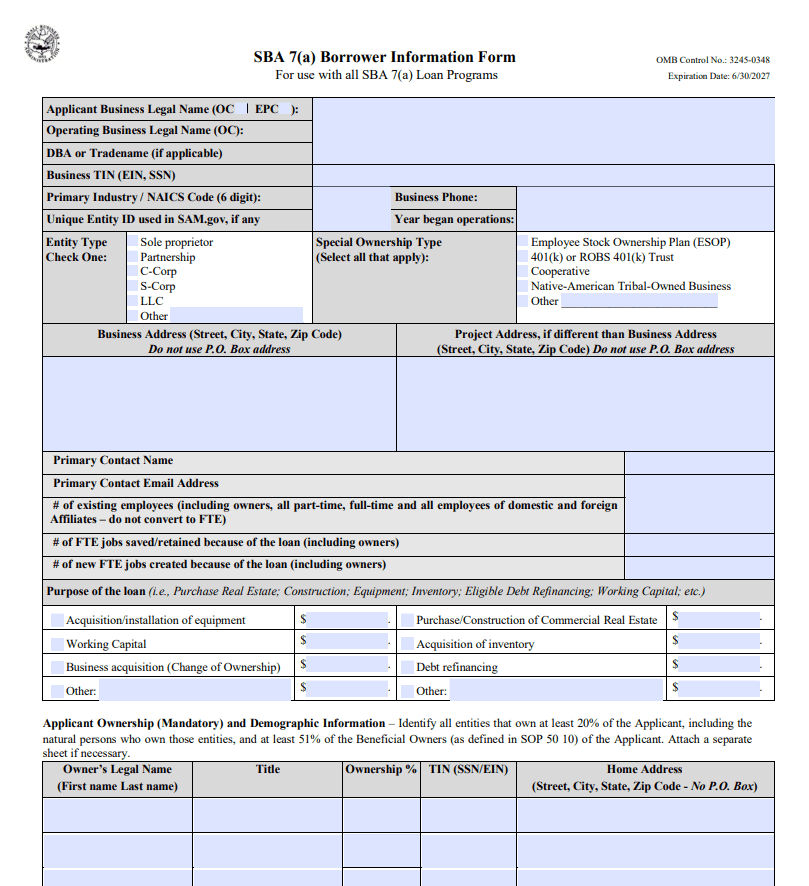
Three years of business tax returns and financial statements for the target, interim statements dated within 120 days of submission plus the comparable prior-year interim, your personal financial statement, your resume, and the full purchase agreement with all schedules and amendments. The two forms every borrower fills out are SBA Form 1919, the borrower information form, and SBA Form 413, the personal financial statement.
Step 4
Survive the tax transcript reconciliation
The lender orders IRS transcripts and verifies the seller's reported figures against them. For change of ownership deals this is treated as an extension of the financial due diligence rather than a formality, and mismatches between what the seller reported to you and what they reported to the IRS are the single most common cause of a deal dying in underwriting. Reconcile it yourself first so you are not learning about it from your banker.
Step 5
The lender commissions the valuation
Not you. The business valuation must be requested by and prepared for the lender, and a valuation prepared for the applicant or the seller may not be used. It has to come from a qualified source: an ASA, an ABV, a CVA, or a BCA accredited appraiser who is independent of the loan production function. The lender must then verify the financial data the appraiser relied on against the seller's IRS transcripts.
Step 6
The quality of earnings report, if the deal is large enough
Under SOP 50 10 8.1, a QoE is mandatory for an initial acquisition or business expansion where the business purchase price is three million dollars or more, measured before any buyer equity, seller debt, or other financing is applied. Like the valuation, it must be conducted for the lender's benefit and may not be prepared by or for the borrower or seller. Choose the firm with your banker.
Step 7
Underwriting: coverage, collateral, and the credit memorandum
The lender analyzes three years of historical financials at the highest level of reporting available, runs the coverage test, tests global coverage on your household at 1 to 1, evaluates collateral, and writes it all into a credit memorandum. This is the longest phase and the one you control least. Your only lever is responsiveness.
Step 8
Approval, the SBA loan number, and rate lock
On approval the loan receives an SBA loan number. That date matters: for a variable rate loan, the base rate in effect on the first business day of the month in which the loan number is assigned sets the basis for your initial rate. A loan approved on the last day of a month prices off a different base rate than one approved a day later.
Step 9
Closing conditions and funding
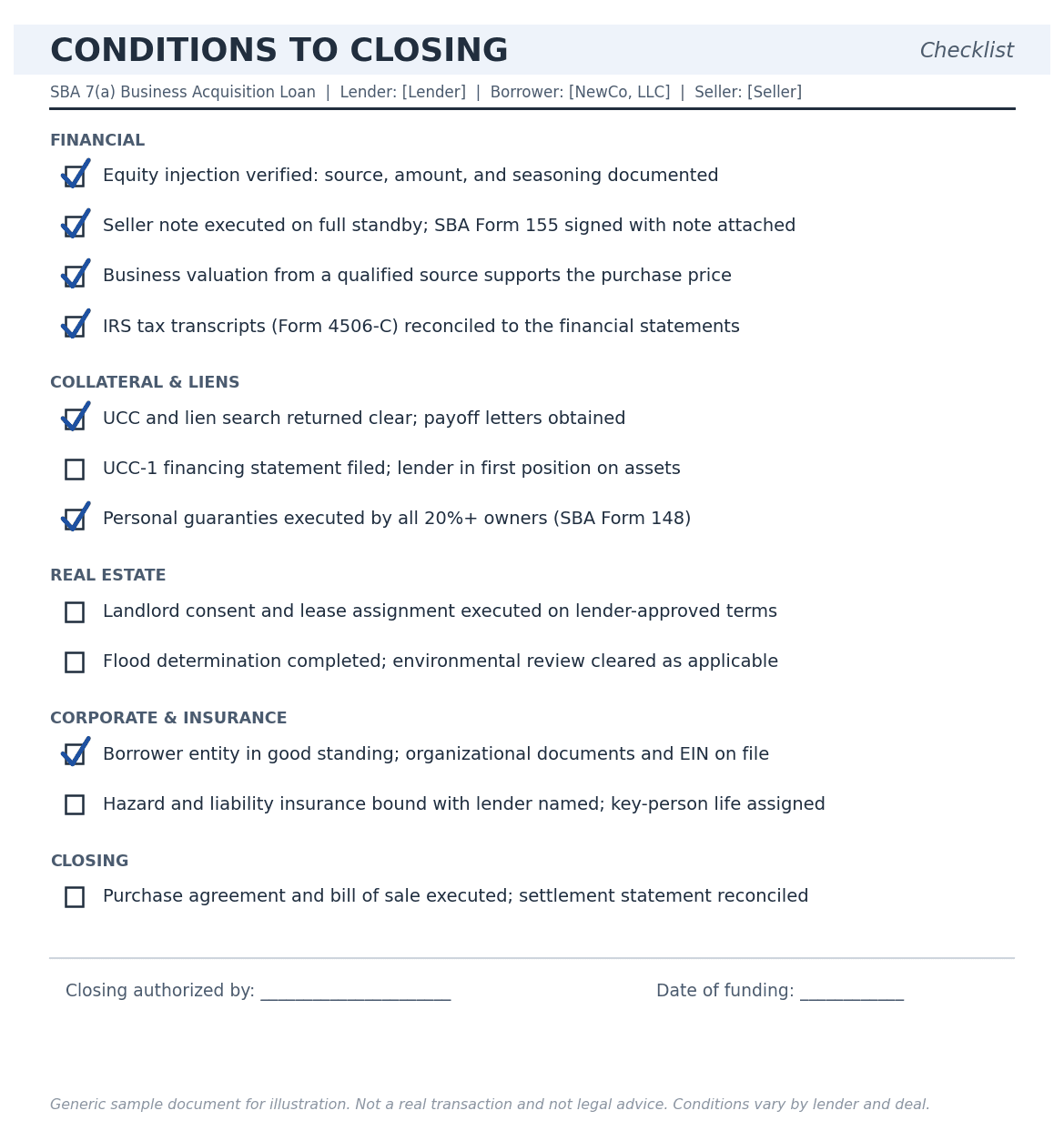
Equity injection verified with documentary proof of source and transfer, standby agreements executed on SBA Form 155 with the seller note attached, guaranties signed, liens perfected on all acquired assets including transferable licenses, life insurance assigned if the loan is not fully secured and the business depends on you, and landlord consent to the lease assignment. The lender also documents a site visit to the business being acquired.
Step 10
Transition, with the seller on a short leash
In an initial acquisition or business expansion, the seller may not remain an officer, director, stockholder, or employee of the business after closing. If a transition period is genuinely needed, the business may contract with the seller as a consultant for no more than 24 months in aggregate, including any extensions. Build your transition plan inside that constraint rather than discovering it at the closing table.
The equity injection
Ten percent of total project cost for an initial acquisition, and for an initial acquisition it cannot be reduced or eliminated. Note the base: total project cost, which includes closing costs, fees, and any other use of proceeds in the loan request, not merely the purchase price. The ten percent is therefore slightly more money than most buyers first calculate.
The distinction that matters is between unlimited and limited sources.
Unlimited sources can fund the entire injection: cash that is not borrowed, whether from your own balance sheet or elsewhere; a personal loan to a guarantor where repayment can be demonstrated to come from a source other than the cash flow of the business, and the salary the business pays you does not qualify as that source; and grants with no clawback or conditional repayment during the loan term. Money you spend out of pocket on the required financial due diligence reports also counts toward the injection.
Limited sources, individually or together, may supply no more than half of the required injection. Seller debt on full standby is the main one.
Business expansions and owner buyouts are treated differently: there, a lender may reduce or eliminate the requirement if the borrower has sufficient liquidity and working capital, provided the balance sheet does not show negative net worth at the last fiscal year end. But eliminating it carries a trap. When a lender eliminates the equity requirement, permanent working capital cannot be included in that or any other 7(a) term loan for 90 days, so it has to come from existing cash or a line of credit. That is covered in working capital after you buy a business, and it is a real squeeze in month two.
The equity injection checker will test a specific structure against these rules, and the full injection rules go source by source.
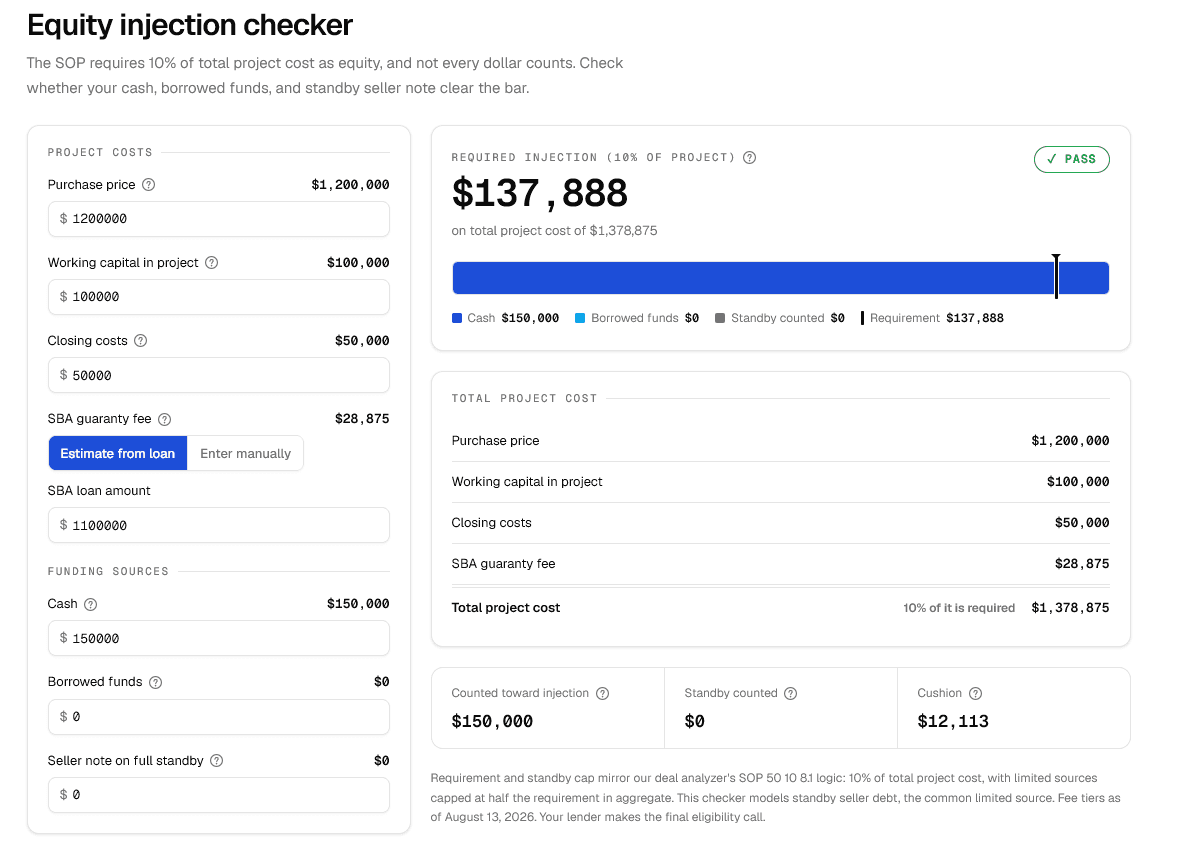
This is also why the buy a business with no money searches mostly resolve to no on SBA terms. Half the injection from a standby seller note is the most generous honest structure available, and that still leaves five percent of total project cost in real money.
Seller financing and what standby actually means
Seller debt is the most useful and most misunderstood tool in an SBA acquisition.
To count toward the equity injection, seller debt must be subordinated to the lender and on full standby, defined as no payments of principal or interest for the term of the 7(a) loan. Not interest-only. Not deferred for two years. Nothing, for the whole term. The standby is documented on SBA Form 155 or the lender's equivalent, with a copy of the note attached and held in the credit file. Interest may accrue and be added to the standby balance, then amortized after the 7(a) loan is paid off. The standby creditor must subordinate any lien rights and may not take an equity investment in the business.
The consequence buyers miss: a seller note with a maturity inside the 7(a) loan term is not on full standby, so it counts for nothing toward the injection. If a broker proposes a seven year seller note alongside a ten year SBA loan and calls it part of your down payment, that structure does not work.
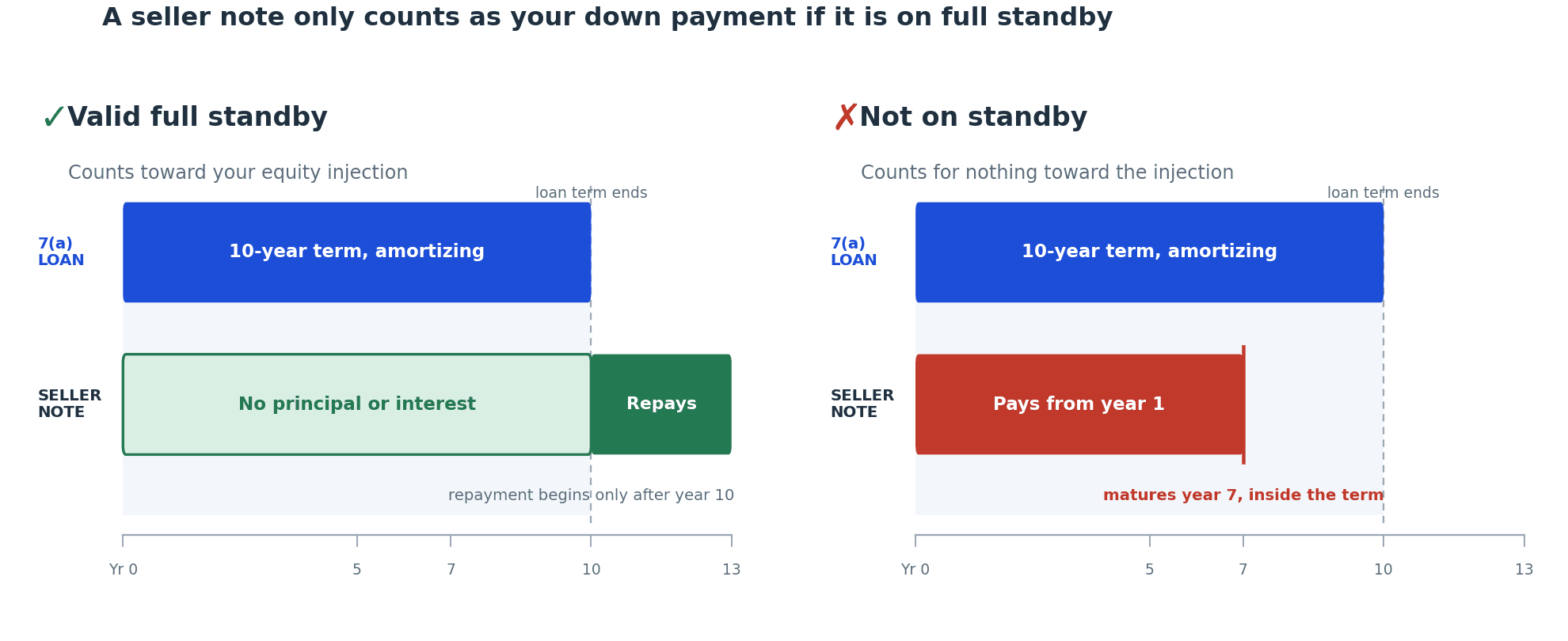
Seller debt that is not on full standby is still permitted, it simply does not count as equity. It counts as debt, and the total debt supporting the transaction, including non-standby seller debt, is limited to the business valuation amount and must be supported by your coverage.
One timing change in SOP 50 10 8.1 worth planning around: seller debt structured with a 7(a) change of ownership becomes eligible to be refinanced after it has been in place and current for 36 months. That was 24 months under version 8. If your long-term plan involved refinancing the seller note out early, the window moved a year further away. How seller notes work in an SBA acquisition goes deeper.
Debt service coverage: the number that decides everything
Coverage is the test the entire underwriting turns on, and SOP 50 10 8.1 raised the bar for acquisitions.
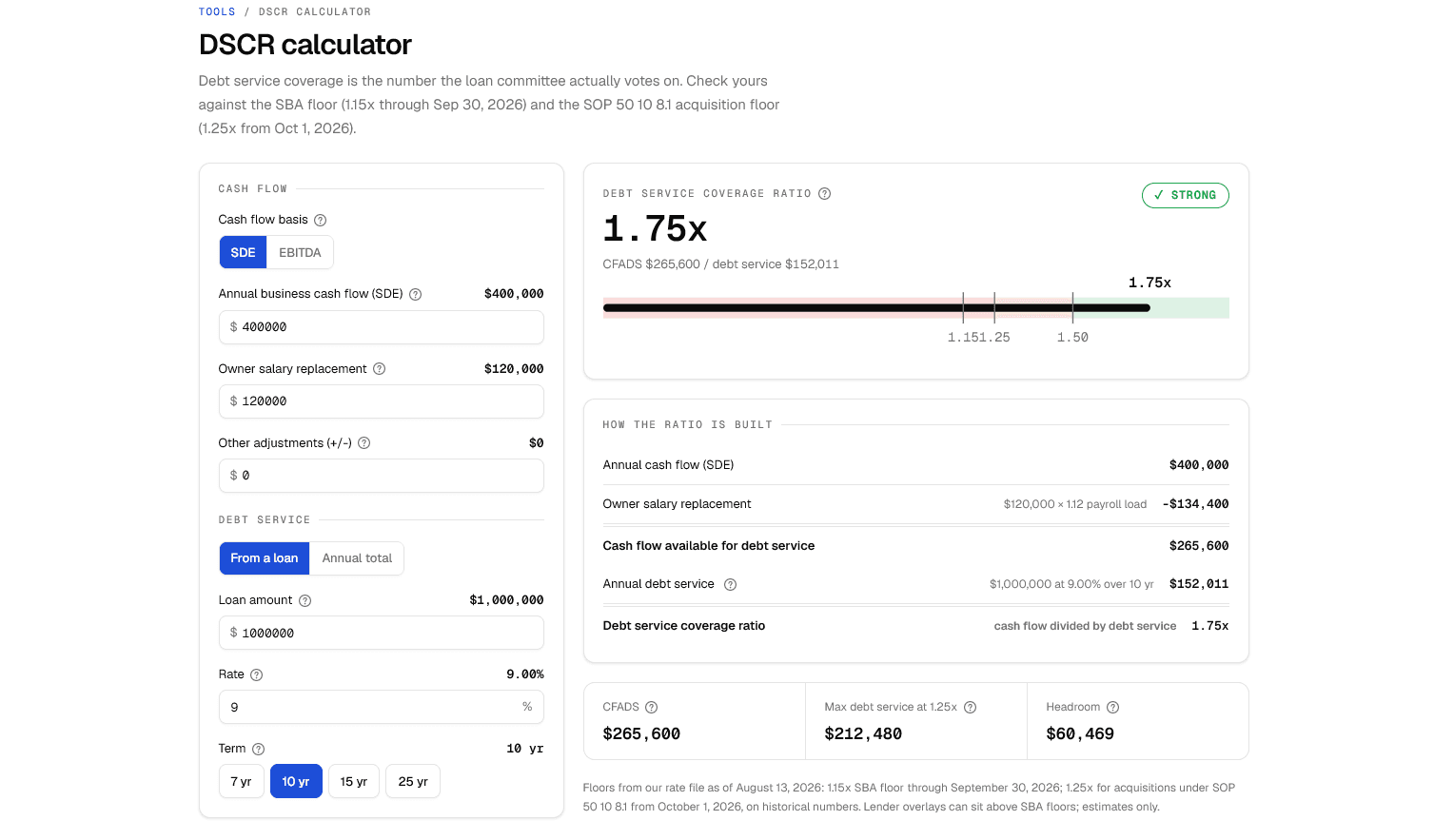
The ratio required depends on the transaction type: 1.25 to 1 for an initial acquisition, 1.15 to 1 for a business expansion, 1.25 to 1 for an owner buyout, and 1.25 to 1 for an ESOP or cooperative. Global coverage across your household must be at least 1 to 1 as well, which is why your personal debts are underwritten alongside the business.
Two mechanics that matter more than the ratio itself.
The measurement basis. Coverage is satisfied using either the last fiscal year end or an average of the last two fiscal year ends, on a historical or adjusted basis. Historical coverage is EBITDA divided by combined post-transaction debt service. Adjusted coverage allows prudent additions and subtractions: unfunded capital expenditures, non-recurring income, distributions, S-corporation tax distributions, seller discretionary expenses, and ownership compensation. Adjustments to owner compensation have to be backed by a global cash flow analysis showing you can actually live on the reduced number.
Projections do not work here. For a change of ownership, the coverage requirement is met on historical or adjusted historical figures. You cannot bridge a coverage gap with a forecast of how much better you will run the business, which is precisely the pitch most buyers want to make. This is also the sharpest difference between buying and starting, worked through in SBA loans for a startup versus buying an existing business.
Run your own numbers against the applicable floor with the DSCR calculator before you agree to a price, not after.
Valuation and the quality of earnings report
Both reports exist for the lender, not for you, and that single fact explains most of what confuses buyers about them.
The business valuation must be requested by and prepared for the lender. A valuation you commissioned, or one the seller brought to the table, cannot be used. It must come from a qualified source accredited as an ASA, ABV, CVA, or BCA, who is independent of loan production and free of any appearance of conflict. The scope of work has to identify whether the deal is an asset or stock purchase and specify what is included, and the report must state a conclusion of value with the appraiser's signature and qualifications. Where real estate is part of the acquisition, its appraised value comes out first to establish the business purchase price separately.
The valuation must support the purchase price regardless of how the debt is structured. If you are paying more than the appraiser concludes, the gap comes out of your pocket as additional equity. Nothing about the financing structure changes that. Understanding how to value a small business before you make an offer is largely about not landing in that position.
The quality of earnings report is newly mandatory in SOP 50 10 8.1 at a three million dollar purchase price, measured before buyer equity, seller debt, or any other financing is applied. It reconciles accountant-prepared statements, tax returns, internal statements, and IRS transcript data into a normalized adjusted earnings figure, documents every add-back, and assesses customer concentration and revenue durability. It must include a cash proof, an analysis that reconstructs cash receipts and disbursements from bank statement data against the income statement and tax return, performed on both a trailing twelve month basis and the last two fiscal years.
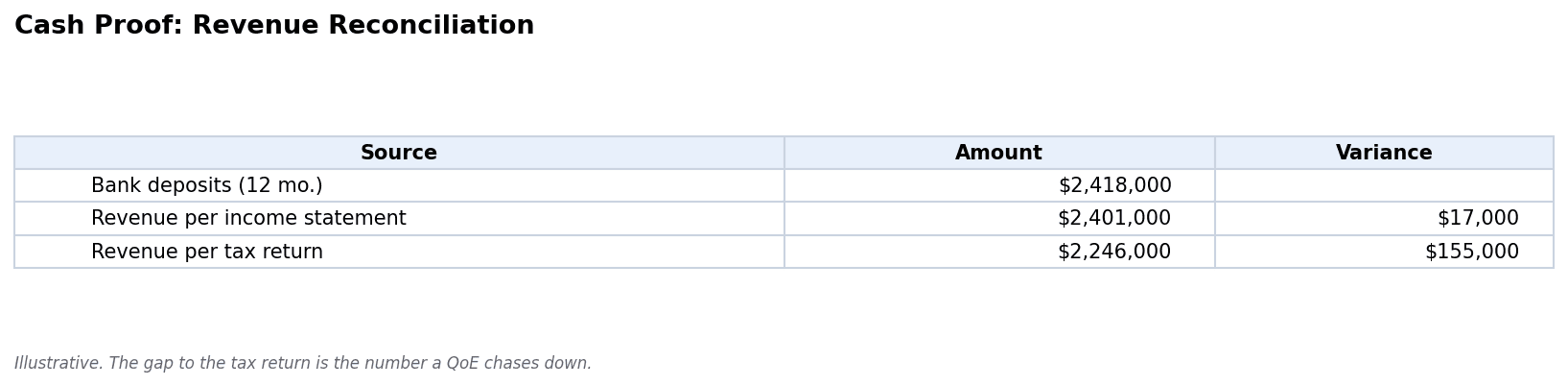
Here is the consequence that catches deals late: the lender must use the QoE's earnings in the coverage calculation. If the coverage that results does not support the valuation and the proposed debt structure, the loan amount must be reduced. Additional equity can close that gap, or the price does. Every aggressive add-back you accepted in week four becomes a live renegotiation in week sixteen. What a quality of earnings report is covers the scope in full.
Rates, fees, and terms
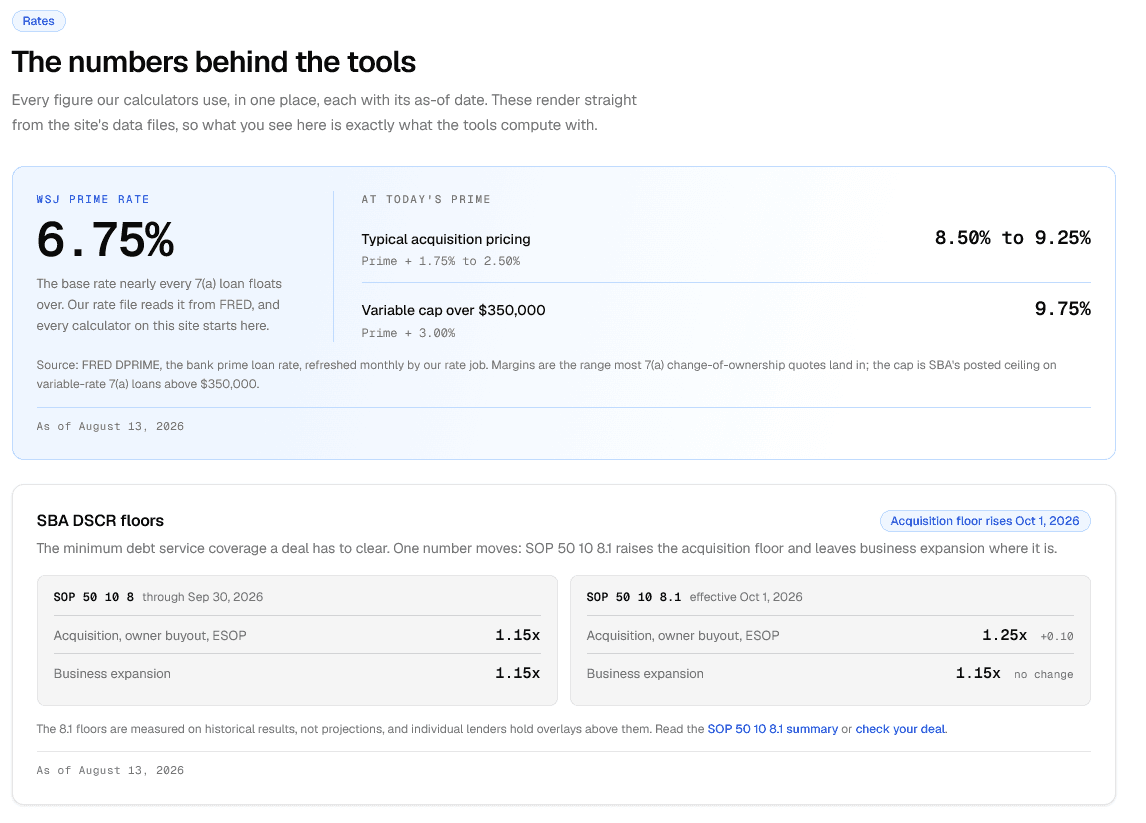
Rates are negotiated between you and the lender, subject to a regulatory ceiling. For variable rate loans the maximum spread over the base rate depends on loan size: Prime or the SBA optional peg rate plus 6.5 percent on loans of $50,000 or less, plus 6.0 percent from $50,001 to $250,000, plus 4.5 percent from $250,001 to $350,000, and plus 3.0 percent on loans of $350,001 and greater. Most acquisitions sit in that last tier.
Two distinctions lender pages blur. First, the ceiling is not the price. Competitive lenders routinely price below the maximum, and the spread is negotiable. Second, the base rate that applies is the one in effect on the first business day of the month in which your loan number is assigned, and the spread stated in your note cannot be changed later without your written agreement. Current numbers are on our rates page.
The guaranty fee is paid by the lender to SBA and routinely passed on to you. It is calculated on the guaranteed portion, not the total loan, at 2 percent for loans of $150,000 or less, 3 percent from $150,001 to $700,000, and for loans from $700,001 to $5,000,000, 3.5 percent of the guaranteed portion up to $1,000,000 plus 3.75 percent of the guaranteed portion above that. Note that the tiers do not stack: the gross loan size selects one row, and that row's formula applies to the whole guaranteed portion. SBA's own worked example makes this concrete. A $5,000,000 loan with a 75 percent guaranty has a guaranteed portion of $3.75 million, so the fee is 3.5 percent of the first $1,000,000, which is $35,000, plus 3.75 percent of the remaining $2,750,000, which is $103,125, for a total of $138,125. You may use loan proceeds to pay it. Note that SBA can announce temporary fee changes for a fiscal year by Information Notice, so confirm the current schedule.
Terms. The maximum for any one standard 7(a) loan is $5,000,000. Acquisition amortization is capped at ten years. Where real estate is part of the purchase, the deal is structured either as separate loans or blended on a weighted average basis, and only the real estate portion may exceed ten years, up to twenty five. Working capital and soft costs always get the ten year allocation. Model the payment and the total interest with the SBA 7(a) loan calculator.
Collateral, guaranties, and your personal exposure
Cash flow is the primary source of repayment, and SBA is explicit that a loan must be declined for insufficient cash flow regardless of available collateral. But collateral still shapes the closing conditions.
A loan is considered fully secured when the lender has taken security interests in all available fixed assets with a combined adjusted net book value up to the loan amount. Used or existing machinery and equipment is valued at no more than 50 percent of net book value, or 80 percent with an orderly liquidation appraisal, minus prior liens. In a goodwill-heavy acquisition, that calculation almost always produces a shortfall, and the shortfall has consequences: the lender will look to other assets, and where the loan is not fully secured and the business depends on one owner's active participation, life insurance is required in the amount of the shortfall.
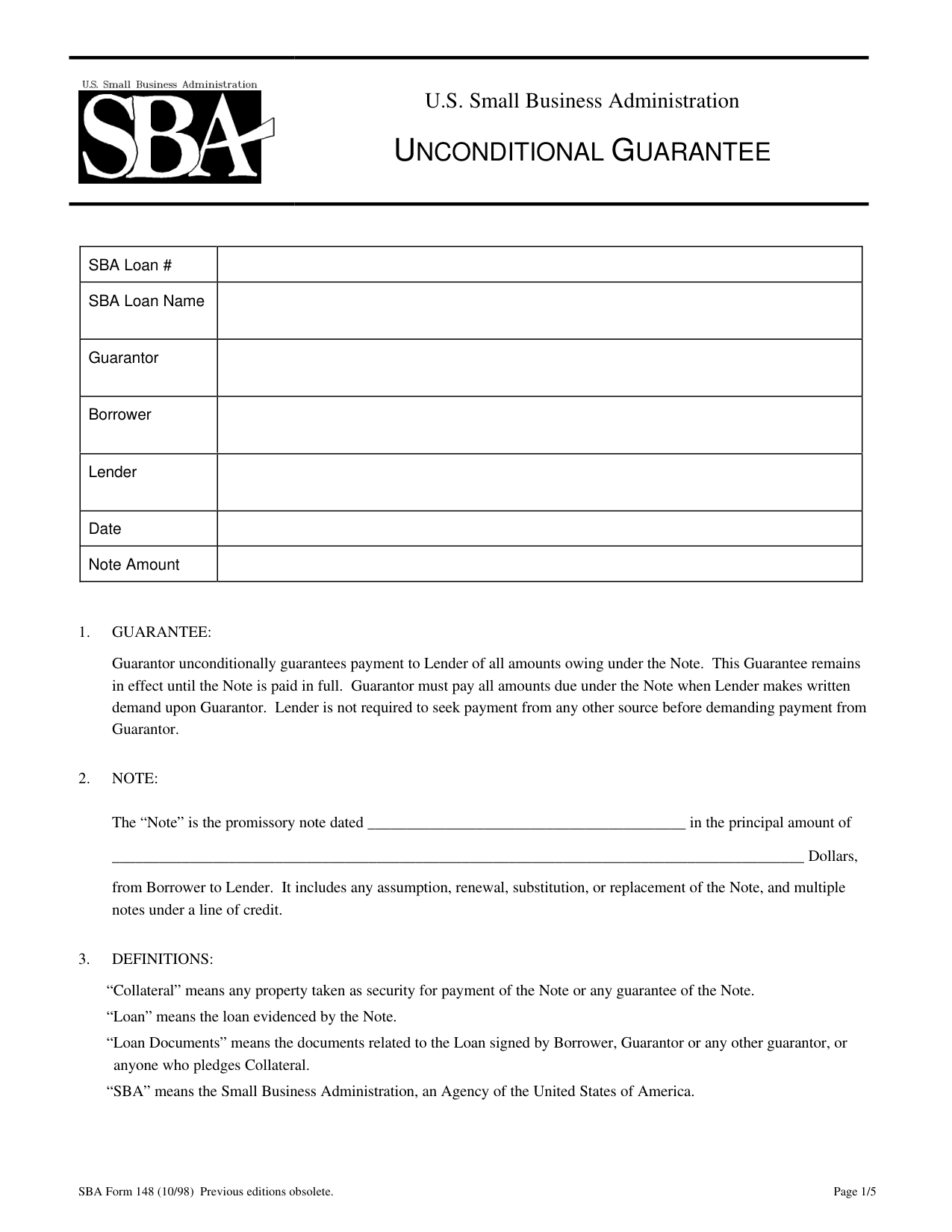
The guaranty is the exposure buyers should think hardest about. Any individual with direct or indirect ownership of 20 percent or more of the applicant must provide an unlimited full guaranty, under 13 CFR 120.160. Entities owning 20 percent or more must also guarantee. This is what people mean by the SBA twenty percent rule, and unlimited means what it says. If the business fails, the guaranty reaches your personal assets. No structure inside the program removes it for a controlling owner.
The requirement that credit be unavailable elsewhere comes from the same body of regulation, at 13 CFR 120.101, and it is worth reading once so you understand why your lender is documenting weakness in your file rather than strength.
Choosing a lender
Lenders in the 7(a) program are not interchangeable, and the differences that matter to an acquisition buyer are rarely the ones advertised.
Delegated authority. Lenders in the Preferred Lender Program, or PLP, can approve loans under their own authority without sending the file to SBA for review. Everything else equal, a PLP lender closes faster. Ask directly whether the lender will process your loan under delegated authority.
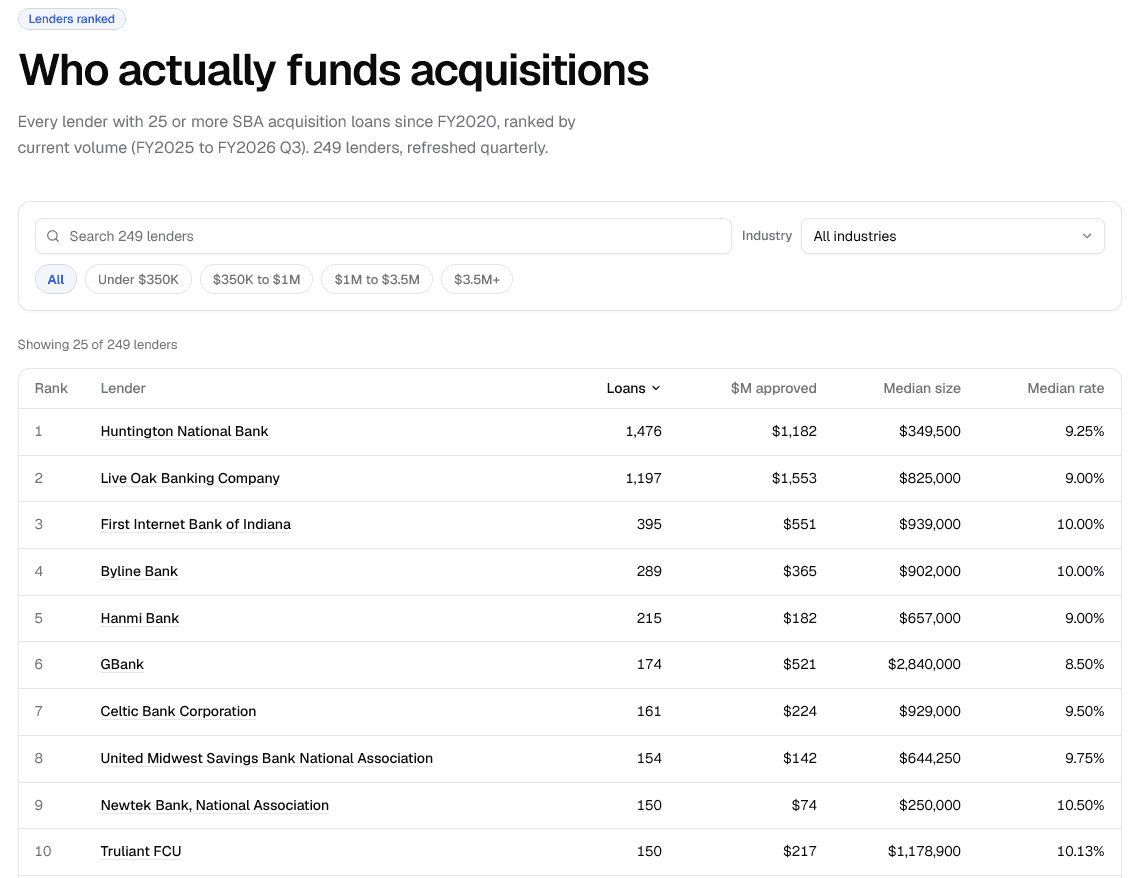
Acquisition volume. A lender that funds change of ownership deals every week has underwriters who understand standby notes, add-backs, and Appendix 15. A lender doing its third acquisition this year will learn on your timeline. Large national SBA lenders such as Live Oak Bank, Wells Fargo, and Bank of America participate heavily in the program, and so do many regional banks and non-bank lenders you have never heard of. Rather than take anyone's word on volume, our lender rankings built from the SBA's own loan-level FOIA data show who actually funds these deals. The underlying dataset is published quarterly at data.sba.gov and covers every 7(a) and 504 loan approved since 1990, so you can check any lender's claims yourself.
Lender Match, SBA's own referral tool at sba.gov, will connect you with participating lenders and is a reasonable starting point if you have no relationships. Treat the matches as a list to qualify, not a recommendation.
Rate matters less than most buyers assume. A quarter point on a ten year note is real money but it is smaller than the cost of a lender who takes an extra two months and loses your seller's patience.
What changes on October 1, 2026
SOP 50 10 8.1 was published August 14, 2026 and takes effect October 1, 2026. Loans in process near that date deserve a direct conversation with your lender about which version governs. The changes that matter most to an acquisition buyer:
- A mandatory quality of earnings report at a business purchase price of three million dollars or more, measured before financing.
- A higher coverage floor for acquisitions, at 1.25 to 1 for an initial acquisition and owner buyout, against 1.15 to 1 for a business expansion.
- Seller note refinancing pushed to 36 months in place and current, extended from 24 months in version 8.
- The loan must be reduced where coverage calculated from the QoE does not support the valuation and proposed structure.
Our full read of the SOP 50 10 8.1 changes works through the diff. Always confirm against the current document on SBA.gov rather than any secondary summary, this one included.
Frequently asked questions
Can I use an SBA loan to buy an existing business?
Yes. Financing a change of ownership is one of the core uses of the 7(a) program, and it will fund intangible assets including goodwill, customer lists, trademarks, and non-competes, which conventional lenders generally will not. Both a stock purchase and an asset purchase qualify, and an asset purchase is treated as a change of ownership when you acquire all or substantially all of the seller's assets and continue operating the business. Change of ownership deals cannot use 7(a) Small standards and must be underwritten under the full Appendix 15 requirements.
What are the requirements for an SBA loan to buy a business?
The business must be a for-profit small business under SBA size standards, organized and primarily operating in the United States, and not an excluded type. You need relevant management experience, acceptable credit and character, and enough liquidity to fund the injection. The deal needs a minimum equity injection of ten percent of total project cost, a debt service coverage ratio of at least 1.25 to 1 on an initial acquisition, a business valuation commissioned by the lender that supports the price, and an amortization no longer than ten years. Anyone owning twenty percent or more of the buyer signs an unlimited personal guaranty.
What is the 20% rule for SBA loans?
Any individual with direct or indirect ownership of twenty percent or more of the applicant must provide an unlimited full guaranty of the loan, and entities holding twenty percent or more must guarantee as well. Twenty percent is also the threshold that triggers several disclosure and eligibility reviews on Form 1919. The guaranty is the part with teeth: unlimited means the lender can reach your personal assets if the business fails.
How does seller financing work with an SBA loan?
A seller note can supply up to half of the required equity injection, but only on full standby, meaning no payments of principal or interest for the entire term of the 7(a) loan. It is documented on SBA Form 155 with the note attached. Interest may accrue and amortize after the SBA loan is repaid. A seller note maturing inside the 7(a) term is not on full standby and counts for nothing toward the injection. Seller debt not on standby is still allowed but counts as debt, and total debt is capped at the business valuation.
How much down payment do I need to buy a business with an SBA loan?
A minimum of ten percent of total project cost for an initial acquisition, and that requirement cannot be reduced or eliminated. Total project cost includes closing costs and fees, not just the purchase price, so the dollar figure is slightly higher than ten percent of the price. Up to half can come from a seller note on full standby, leaving five percent of total project cost that must come from unlimited sources such as unborrowed cash. Budget separately for working capital after closing.
How long does an SBA acquisition loan take?
The parts you control move in weeks. The parts you do not, meaning the lender's valuation, the quality of earnings fieldwork if required, underwriting, credit committee, and closing conditions such as landlord consent, typically run considerably longer and vary by lender and deal complexity. A lender with delegated Preferred Lender Program authority avoids sending the file to SBA for approval, which removes one queue. The single biggest variable you control is how fast you return document requests.
Can the seller stay on after closing?
Not as an owner or employee. In an initial acquisition or business expansion the seller may not remain an officer, director, stockholder, or employee of the business. If a transition period is needed, the business may contract with the seller as a consultant for a period not exceeding 24 months in aggregate, including any extensions. Seller earnouts are prohibited entirely, though buyer rebates tied to business performance are permitted because they benefit the borrower.
The short version
An SBA loan to buy a business is not a mortgage with extra paperwork. It is a structured product with four binding constraints, and the price you negotiate is the least binding number in the deal, because all four are set by the business and the rules, not by what you and the seller agreed.
Test a structure against all four before you sign a letter of intent. Every one of these rules is knowable in advance, and every buyer who discovers one of them in week sixteen could have discovered it in week four.
This article is process documentation and general education, not legal, tax, or financial advice. SBA rules change, and individual lenders apply them with their own overlays and credit policies. Confirm anything here with your own lender, attorney, and CPA before acting on it.